How to Fix Uneven Subfloor Before New Flooring

A new floor can look excellent for the first few weeks, then begin to squeak, separate, or feel soft underfoot. In many cases, the flooring itself is not the problem. The trouble started below it. To fix uneven subfloor properly, you first need to know whether the floor is simply out of level, has a low spot, or is moving because of moisture, damaged framing, or a failing subfloor panel.
That distinction matters. A thin layer of leveling compound can correct a shallow dip, but it will not solve rot, loose plywood, or a sagging floor joist. Addressing the cause before installing new flooring protects the investment and helps the finished room feel solid for years.
Start by Measuring the Floor, Not Guessing
Homeowners often notice unevenness when a rolling object drifts across the room, a door rubs after flooring is installed, or furniture rocks in one corner. Those are useful clues, but the floor needs to be measured before a repair plan is chosen.
Remove the existing finish flooring when possible. Carpet, laminate, vinyl, and tile can hide the real condition of the subfloor. Then use a long straightedge, level, or laser level across the room. Mark low areas, high spots, soft sections, squeaks, and seams that rise above adjacent panels.
A floor can be out of level and still be flat. For example, an older home may slope gradually from one side of a room to the other but have no abrupt dips or humps. Many flooring materials care more about flatness than perfect level. Tile, large-format tile, rigid-core vinyl, and laminate are especially sensitive to localized high and low areas. Hardwood also needs a stable, well-supported surface, though the acceptable tolerances depend on the product and installation method.
Check the flooring manufacturer's requirements before work begins. Most specify how much variation is allowed over a certain distance, often measured with a 6-foot or 10-foot straightedge. Meeting those requirements helps prevent avoidable warranty issues.
Find Out Why the Subfloor Is Uneven
An uneven subfloor is a condition, not a diagnosis. The repair should match what caused it. In Northern California homes, common sources include normal settling, seasonal moisture changes, plumbing leaks, crawlspace humidity, and aging materials.
Loose or Damaged Subfloor Panels
Plywood and oriented strand board panels can loosen over time, especially where fasteners missed a joist or where adhesive was not used during original construction. The result may be squeaks, movement at panel edges, or a noticeable soft spot.
Water damage is more serious. A dishwasher leak, failed toilet wax ring, shower leak, or exterior door issue can swell, delaminate, or rot the subfloor. If the panel has lost its structural integrity, it should be removed and replaced rather than covered with a patching product. Any active source of moisture must be repaired first.
High Seams and Improper Fastening
Subfloor seams can sit proud when panels are installed too tightly, swell from moisture, or flex because they are not properly supported. A raised seam may telegraph through vinyl flooring or crack tile above it.
In some cases, adding the correct screws into the joists and carefully sanding or planing a minor ridge is enough. The work must be controlled. Removing too much material weakens the panel, and driving screws without confirming joist locations can damage wiring or plumbing below.
Low Spots Between Joists
A shallow depression can develop where subfloor panels flex between joists. This is sometimes an installation issue, but it can also point to undersized, notched, or compromised framing. A low spot that feels firm and does not continue to move may be suitable for a compatible leveling product.
A low spot that bounces, gets worse over time, or appears near a beam, foundation wall, or plumbing repair deserves a closer look from below. The subfloor may be telling you there is a framing issue underneath.
Sagging or Altered Floor Framing
Floor joists can sag from long-term loads, moisture exposure, foundation movement, or poorly planned alterations. Cuts made for plumbing, electrical, or ductwork can also weaken framing when they are too large or placed in the wrong area.
This is not a cosmetic repair. Depending on the cause, the solution may involve sistering joists, adding blocking, installing support, or bringing in a qualified specialist for structural concerns. A leveling compound on top may make the surface look better temporarily while the floor continues to move below.
Choose the Right Way to Fix Uneven Subfloor
Once the cause is clear, the repair can be selected with confidence. The right approach may be simple, but it should never cover up moisture or movement.
For minor high spots, the repair may involve fastening loose panels, sanding a raised seam, or using a planer in a limited area. Dust control matters, especially in older homes where existing flooring adhesives or finishes may require careful handling.
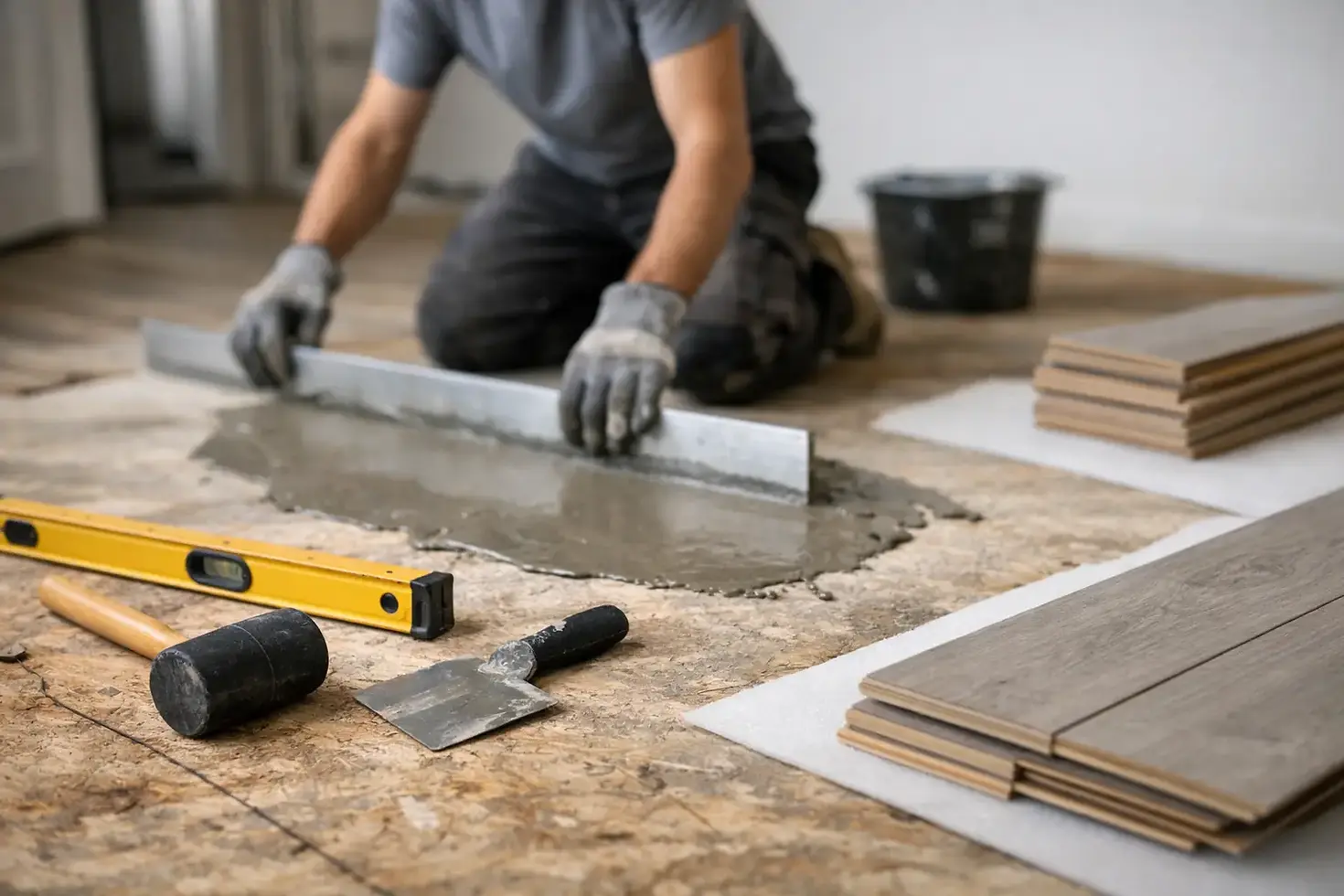
For shallow, stable low spots, a floor patch or self-leveling underlayment can create the flat surface required for the new flooring. The subfloor must be clean, dry, solid, and properly primed when the product calls for it. Self-leveling products are not automatic fixes. They need proper containment at doorways and openings, and they add weight and height to the floor assembly.
For widespread unevenness, an underlayment-grade plywood overlay may be the better answer. This can smooth minor variations and provide a consistent base, but it raises the finished floor. That can affect transitions to nearby rooms, appliance clearances, baseboards, doors, and toilet flange height. It also will not correct a soft or structurally weak floor underneath.
When panels are swollen, cracked, rotted, or badly damaged, replacement is usually the most dependable route. The damaged section is cut back to solid support, new blocking is added where needed, and a matching panel is installed with appropriate spacing and fastening. The repair should be checked for flatness before underlayment or finish flooring goes down.
Do Not Skip Moisture Checks
Moisture is one of the main reasons floor repairs fail. A subfloor can feel dry at the surface while retaining moisture below, particularly near kitchens, bathrooms, exterior walls, and crawlspaces. Installing wood flooring, laminate, or leveling materials over an unresolved moisture problem can lead to swelling, adhesive failure, mold growth, and recurring damage.
Look for staining, musty odor, corrosion on fasteners, loose vinyl, cupped hardwood, or softened material around plumbing fixtures. In a crawlspace, inspect for standing water, missing vapor barriers, poor ventilation, drainage problems, or leaking supply and drain lines.
The fix may include plumbing repair, drainage improvements, crawlspace moisture control, or correcting an exterior entry point before the floor assembly is rebuilt. It is more work upfront, but it prevents the same uneven area from returning after new flooring is installed.
When a Professional Repair Is the Better Choice
A handy homeowner may be comfortable tightening a few loose fasteners or filling a very small, stable depression. The project becomes more complex when flooring must be removed, moisture is present, the subfloor feels soft, or framing may be involved.
Professional help is particularly worthwhile before installing tile, hardwood, or premium vinyl flooring. These materials can make small flaws more obvious, and replacing them after a failed installation costs far more than preparing the base correctly.
A qualified handyman team can assess the visible subfloor, identify practical repair options, and coordinate the work around doors, trim, fixtures, and transitions. True Skill Handyman provides on-site consultations for homeowners who want a clear repair plan before moving ahead with flooring work.
Protect the New Floor During Reinstallation
After repairs are complete, recheck the floor with a straightedge and make sure every patch, seam, and replacement panel is secure. Vacuum thoroughly. Small debris, protruding fasteners, and dried patching material can create visible imperfections in thin flooring products.
Allow repair materials to cure as directed, then follow the flooring manufacturer's requirements for underlayment, moisture barriers, adhesive, acclimation, and expansion gaps. A flat, dry, stable subfloor gives every finish floor its best chance to perform well.
If your floor feels uneven, treat it as an opportunity to correct what is underneath before it affects the room above. A careful inspection and a repair matched to the real cause can turn a frustrating floor problem into a solid foundation for the upgrade you actually want.


Comments