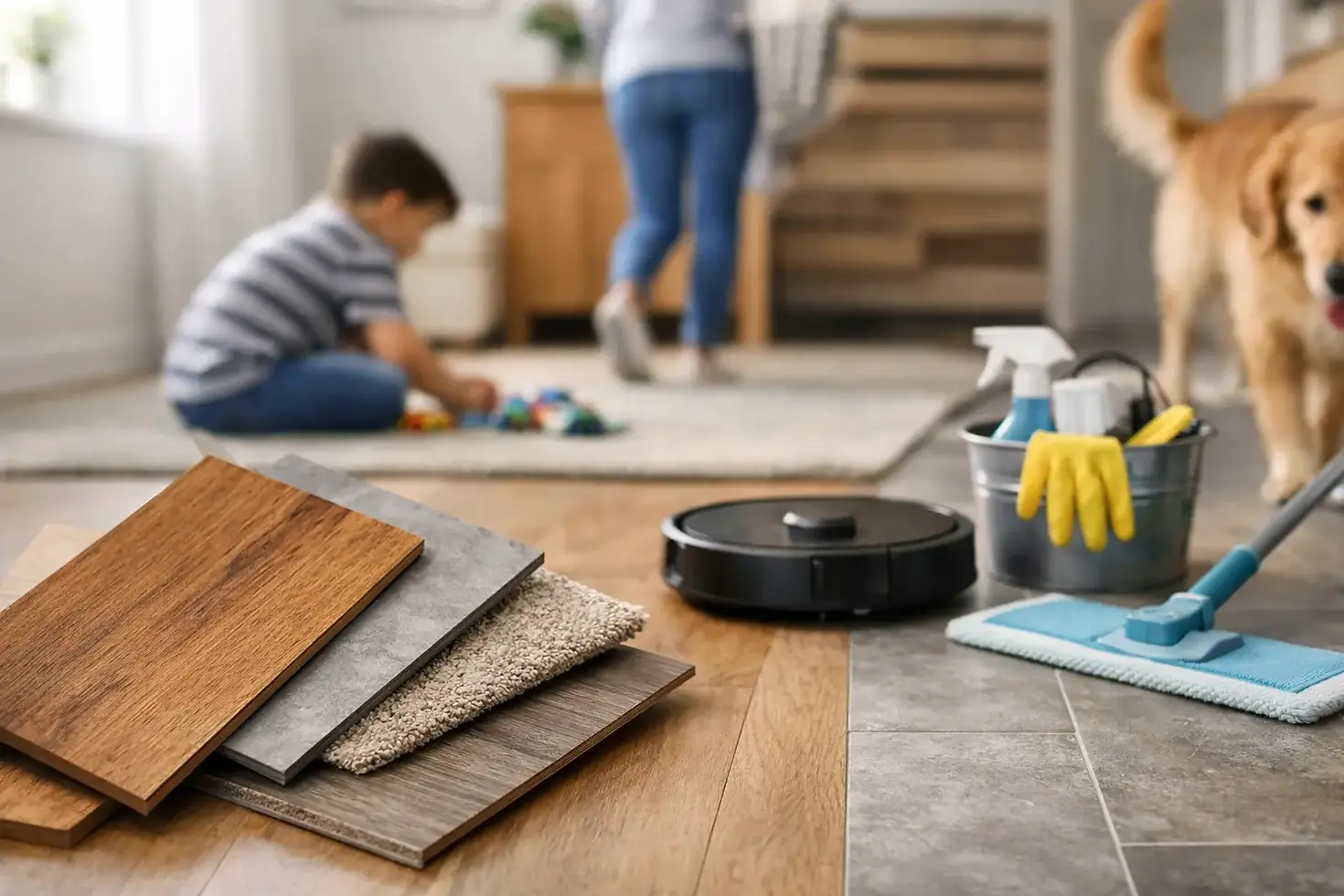
Best Flooring for Busy Households Compared

Mud at the entry, pet nails in the hallway, dropped dishes in the kitchen, and kids racing through the living room all put flooring to the test. The best flooring for busy households is not simply the toughest material on the showroom wall. It is the option that fits how your family actually lives, cleans, entertains, and moves through the home.
For homeowners across Placer, Nevada, and Sacramento-area communities, that decision often comes down to balancing durability, water resistance, comfort, appearance, and budget. A beautiful floor that is difficult to maintain can quickly become a source of stress. A practical floor that feels right underfoot and holds up to daily use is a better long-term investment.
What Busy Households Need From Their Floors
Every home has high-traffic areas, but busy households tend to have more of them. Entryways, kitchens, hallways, dining rooms, living spaces, and laundry rooms see repeated foot traffic, spills, dragged chairs, and grit tracked in from outdoors. Homes with dogs, young children, frequent guests, or active hobbies need surfaces that can take a hit without looking worn after a few years.
Start by thinking about the conditions in each room. Water resistance matters most in kitchens, bathrooms, laundry rooms, and near exterior doors. Scratch resistance becomes more important with large dogs, rolling toys, and furniture that gets moved often. In bedrooms and upstairs living areas, sound control and comfort may matter more than full waterproof performance.
No single material is perfect everywhere. Many homeowners get the best result by using one durable floor throughout the main living spaces and choosing a different material where moisture, warmth, or sound reduction calls for it.
Best Flooring for Busy Households: Top Choices
Luxury Vinyl Plank Offers the Best All-Around Balance
Luxury vinyl plank, often called LVP, is one of the most practical choices for active homes. It is designed to resemble hardwood while offering better water resistance and easier upkeep. Quality products stand up well to everyday spills, pet traffic, and the wear that comes with a full household.
LVP is also more forgiving underfoot than tile and usually quieter than hard surfaces such as ceramic or porcelain. It works especially well in open floor plans because it can run continuously through living rooms, hallways, kitchens, and bedrooms for a clean, consistent look.
The trade-off is that not all vinyl flooring performs the same. Lower-cost products may dent, fade, separate at the seams, or show wear in heavy-use areas. A good wear layer, proper subfloor preparation, and careful installation make a major difference. Vinyl can also be damaged by sharp objects or very heavy furniture if it is not protected with appropriate pads.
For many families, LVP is the strongest combination of durability, appearance, comfort, and value.
Porcelain Tile Handles Water, Grit, and Heavy Use
Porcelain tile is hard to beat in spaces that see water and dirt every day. It is highly durable, resists moisture, and does not scratch easily under normal household use. For mudrooms, bathrooms, laundry rooms, entryways, and kitchens, porcelain can provide decades of dependable service when installed correctly.
Tile is especially useful for homes where wet shoes, pool traffic, pets, or frequent cleaning are part of the routine. It also works well with radiant floor heating, which can make a tile floor much more comfortable during cooler Northern California mornings.
The downside is comfort. Tile is hard underfoot, cold without heated flooring, and less forgiving when a glass or dish falls. Grout lines also need attention, particularly in light colors. Choosing a stain-resistant grout and a larger-format tile can reduce maintenance and limit the number of grout joints.
Engineered Hardwood Brings Warmth With More Stability
If you want the character and warmth of real wood, engineered hardwood is often a more practical option than solid hardwood. It has a genuine wood surface over a layered base that is designed for better stability as indoor humidity changes. That makes it a strong choice for living rooms, dining rooms, bedrooms, and many main-floor areas.
Engineered hardwood can be refinished in some cases, depending on the thickness of its top wood layer. It also adds a level of natural detail that vinyl cannot fully duplicate. For homeowners planning to stay in their home long term, that appearance can be worth the added cost.
Still, engineered wood is not waterproof. Standing water, repeated spills, and moisture from pet bowls or leaky appliances can cause problems. It can also scratch, especially with large dogs or children who are hard on the floor. A low-sheen finish and a species with a more textured grain can help hide everyday marks.
This flooring works best for households that want real wood and are willing to wipe up spills promptly, use mats at doors, and accept that a lived-in wood floor develops some character over time.
Laminate Can Be a Smart Value Choice
Modern laminate has come a long way in both appearance and performance. It is generally scratch-resistant, budget-friendly, and available in wood and stone looks. Some newer products include water-resistant cores and sealed edges that make them more suitable for kitchens and active family spaces than older laminate floors were.
Laminate is a good fit when scratch resistance and cost are the main concerns. It can work well in bedrooms, hallways, and living areas with plenty of foot traffic. It is also relatively easy to clean with regular sweeping and a lightly damp mop approved for the product.
Its limitation is moisture. Even water-resistant laminate is not always suitable for standing water or chronic dampness. If water gets into seams, the core can swell. For bathrooms, laundry rooms, or homes with frequent pet accidents, waterproof vinyl or tile is usually the safer choice.
Carpet Still Has a Place in Select Rooms
Carpet is not usually the best choice for an entire busy household, but it remains valuable in bedrooms, playrooms, and upstairs spaces where softness and noise control matter. It creates a warmer, quieter room and can make stairs safer for young children and older adults.
For an active home, choose a stain-resistant synthetic fiber and a lower, denser pile rather than a plush style that traps dirt and shows traffic patterns. Carpet tiles can also be worth considering in playrooms or home offices because individual damaged sections can be replaced.
Avoid carpet in entryways, dining rooms, bathrooms, and other areas with regular spills or outdoor traffic. It is harder to keep clean than hard-surface flooring and may hold odors or allergens if not maintained consistently.
Do Not Overlook the Installation Details
Even the right flooring can fail if the installation is rushed. Subfloors must be flat, sound, and dry before new flooring goes in. Uneven areas can cause clicking, movement, cracked tile, gaps, or premature wear. Moisture testing is particularly important over concrete slabs and in areas near bathrooms, kitchens, or exterior doors.
Transitions between rooms deserve attention too. A well-planned transition protects flooring edges, prevents trip hazards, and gives the finished project a clean appearance. Door clearances, baseboards, appliance openings, and existing floor height all need to be considered before materials are ordered.
This is where working with an experienced local handyman and remodeling team can save time and prevent expensive corrections. True Skill Handyman can help homeowners assess the existing floor, identify needed repairs, and install finishes with the details handled carefully from the start.
Match the Floor to the Room, Not Just the Trend
A single flooring type throughout the home creates visual continuity, but it is not always necessary. A waterproof vinyl plank in the main living areas paired with porcelain tile in bathrooms can be a practical, polished combination. Engineered hardwood in a formal living space with durable carpet upstairs may better suit a home where comfort and natural materials are priorities.
Before deciding, bring home samples and look at them in morning, afternoon, and evening light. Check how the color works with cabinets, wall paint, and furniture. More importantly, touch the surface, walk on it in bare feet, and ask how it will handle the routines you have now, not the routines you hope to have someday.
The right floor should make daily life easier. When a surface can handle wet shoes, busy mornings, pets, family gatherings, and ordinary messes without demanding constant attention, your home has one less thing to worry about.


Comments